Pesticide use in the U.S. is ubiquitous and has increased over the past several decades – particularly in homes and gardens. Children face much higher hazards than adults from pesticide exposure due to their small size and developing organ systems. They are also more likely to accidentally ingest pesticide residues while playing on or near the ground.
South Portland, Maine, population 25,000, is a popular destination for young families who value our community’s walkability and access to outdoor recreation spaces.
South Portland City Council enacted some of the strictest pesticide use provisions in the nation to protect our residents and neighborhoods in 2016. The City’s pesticide and fertilizer use provisions are combined in the Landcare Management Ordinance, designed to promote a transition to organic land care practices.
Active enforcement is challenging, so staff included robust requirements for outreach and education in the ordinance. And, the City has implemented multiple initiatives to support this transition. These initiatives have been successful in gaining community recognition and support for organic land care practices, but it’s clear that community members need guidance tailored to their yard’s challenges and opportunities.
So starting today, we’re revitalizing South Portland, one yard at a time!
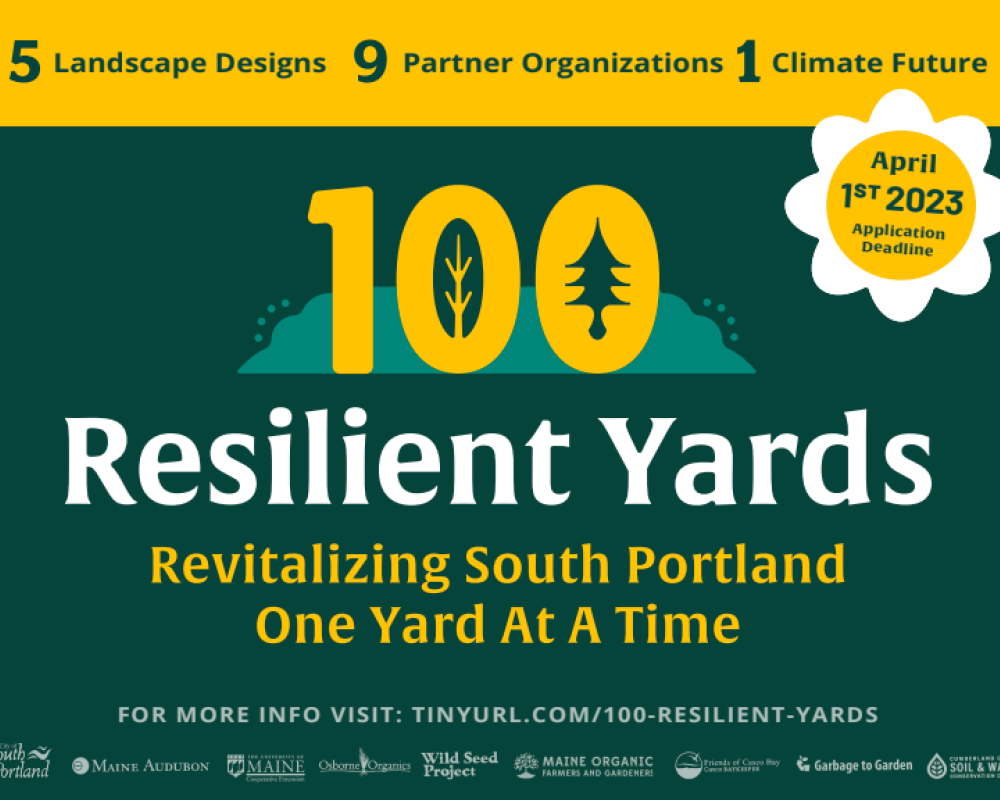
The City of South Portland Sustainability Department is thrilled to announce the launch of “100 Resilient Yards.” This program provides technical expertise and resources to residents and/or businesses to transform 100 properties into resilient, organic landscapes. The program is free and applications can be submitted until April 1.
Starting today, we’re looking for 100 diverse, public-facing yards or green spaces in South Portland to participate in our resilient yards program. Property owners accepted into the program will receive a one-hour technical assessment to better understand features and issues in their yards or green spaces. The experts will provide recommendations to help transform those spaces into one of five resilient yardscapes: pollinator garden, rain garden, vegetable garden, native planting, and/or organic lawn.
Trained volunteers will follow up with property owners to help begin implementation of the recommendations. Participating property owners will also receive a resource package with materials that can help start their transition. Resources may include native plants, seeds, plans, raised beds, and/or compost.
For more information about 100 Resilient Yards and to apply as a participant or volunteer for the program, visit: https://tinyurl.com/100-Resilient-Yards
More questions about South Portland’s work? Contact Julie Rosenbach, City of South Portland Sustainability Director, at jrosenbach@southportland.org.
Questions? To discuss this and anything else, please contact Bright Cities Program Director, Kyra Naumoff Shields at knaumoff@hbbf.org.
Related Content

Playbook for Children's Health

