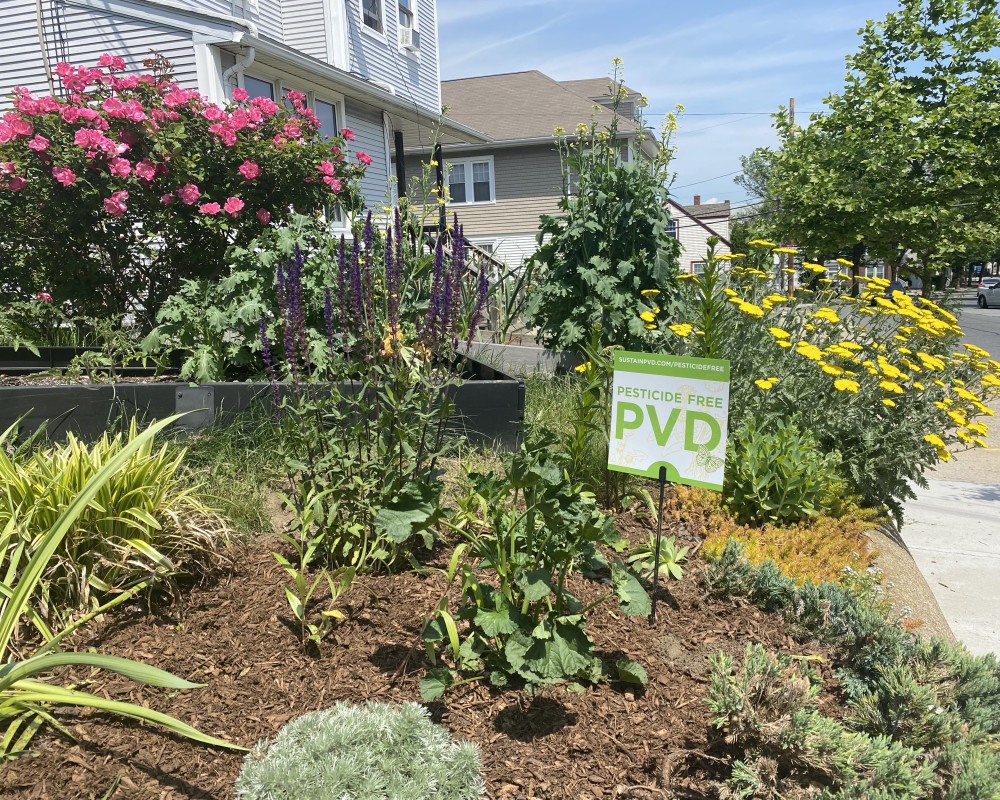
In Providence, Rhode Island, city leaders think big when it comes to fostering healthier communities for all. Community and city leaders gained national recognition in 2019 with the launch of Providence’s Climate Justice Plan that creates a vision for a low-carbon future that centers frontline communities closest to and most impacted by the climate crisis and other environmental injustices.
In tandem with community-led and citywide initiatives, Providence staff were determined to lead by example in city-owned schools and facilities. They embarked on an internal audit to determine what actions the city could take to reduce neurotoxic pollution and foster healthy green spaces.
Building on this foundation, staff in Providence’s Office of Sustainability—with community partner Clean Water Action—crafted three avenues towards a chemical-free future:
- Published a well-documented report Pesticide and Chemical Free Management Practices in Providence Parks that enabled the Parks Department to institutionalize and expand their best management practices.
- Launched a public health education campaign called Pesticide Free PVD.
- Passed an environmentally preferable purchasing resolution to move a citywide strategy.
“Today, the Roger Williams Park Botanical Center is managed almost entirely chemical free. Managers of the facility release beneficial insects to control pests and use goats to graze weeds,” shared Samantha Kronyak, author of Pesticide and Chemical Free Management Practices. “Dozens of other city parks implemented modifications to reduce the use of chemically treated wood and rubber mulch (which can leach toxins) at playgrounds. Bottom line— Providence is doing really good stuff for babies and families!”
Providence’s online public health education campaign, Pesticide Free PVD, was modeled after Bright City Salt Lake City’s Pesticide Free SLC campaign so that other cities are free to use this framework for their own Pesticide Free campaigns.
Over 100 Providence residents pledged to go pesticide free, resulting in 500,000 square feet (~11.5 acres) of private, primarily residential, land pledged managed without pesticides—in addition to municipal turf managed without pesticides. Staff designed the pledge form to help residents accurately estimate land managed without chemical pesticides and fertilizers. After taking the pledge, residents were directed to look up their lot size using a link to Providence’s online assessment database. Clear instructions were provided to calculate the square footage maintained without chemical inputs.
As sustainability staff learned more about where chemical exposures were likely to occur, staff evaluated internal opportunities to reduce toxic exposures. Joining many other US cities, staff made a plan to use the city’s purchasing power to make safer purchases for employees and residents and to use market forces to encourage companies to shift to safer products.
Providence City Council passed a resolution in support of environmentally preferable purchasing in January 2021. This set the stage for two decisions. The first was to initiate environmentally preferable purchases citywide for office and cleaning supplies. The second was to review the integration of Providence’s chemical reduction strategies and Providence’s Climate Justice Plan into key strategic planning documents like the Comprehensive Plan and Providence’s code of ordinances.
The range of resources and technical support on environmentally preferable purchasing from Clean Water Action, HBBF, and other national leaders has helped better position our office to collaborate and support other departments in institutionalizing sustainability across city operations.
Curious about how to take action in your city? Read the complete Providence case study, including a five step Playbook to Roll out Chemical Free Strategies.
More questions about Providence’s work? Contact Emily Koo, Providence's Director of Sustainability, at Ekoo@providenceri.gov.
Is your City interested in being part of Healthy Babies Bright Futures’ Bright Cities program? To discuss this and anything else, please contact Bright Cities Program Director, Kyra Naumoff Shields at knaumoff@hbbf.org.
Related Content

Playbook for Children's Health

