Because Norman, Oklahoma is home to more than 125,000 residents and the state’s largest university, the city is full of the usual campus activity, but also includes a wide range of household incomes.
As COVID-19 increased the number of families with diminished income, many families became eligible for existing social support services, but weren’t aware of the available resources. Without connections to these vital services, children and families lacked access to healthy food (via WIC and SNAP programs), transportation options, and information about reducing neurotoxic exposures in the home.
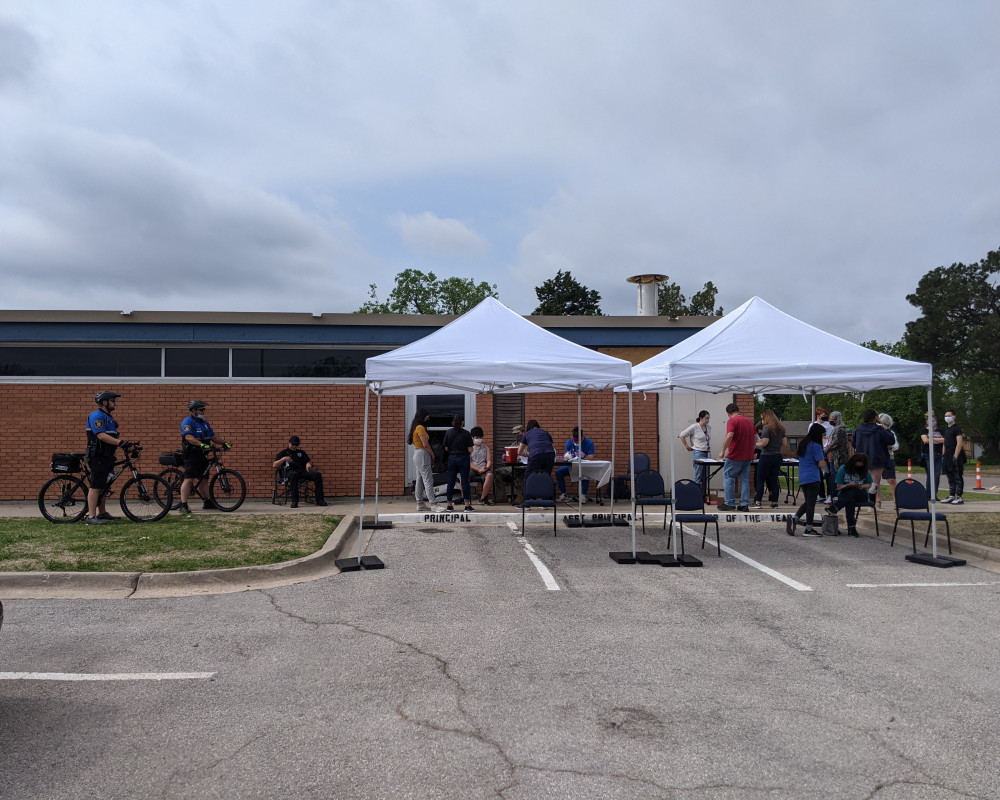
To address this disconnect, Mayor Breea Clark proposed a series of Community Access Pop-up Spots (CAPS): a bi-monthly resource for neighborhoods with consistently high levels of food insecurity, poverty, and barriers to transportation and technology. CAPS was designed to meet residents in their communities and increase awareness and access to available resources through individual consultations.
With support from the Healthy Babies Initiative, funded by Healthy Babies Bright Futures and the Mayors Innovation Project, the city purchased four iPads and internet hotspots that allowed CAPS staff to help event attendees register for services on the spot. CAPS staff could verify enrollment in social support services, answer questions, and help residents avoid other obstacles to accessing services.
“Children in our communities will be off to a healthier start with better connections to programs that provide healthy food and transportation,” said Mayor Clark. “Our Community Access Pop-up Spots proved to be a fun and effective way to connect these dots.”
In addition to guidance about how to qualify for local, state, and federal service programs, staff provided education on how to reduce the neurotoxic exposures to kids — like healthy eating on a budget, smoking cessation, and safer cleaning and disinfection methods.
"More than ever, our community needs resources and services that are just as flexible, moveable, translatable, and resilient as our community members have been in these unprecedented times,” said Sara King, spokesperson for the Cleveland County Health Department. “Having the City of Norman and the Cleveland County Health Department take cohesive steps in creating a more accessible resource hub will hopefully serve as a foundation for how to continue growing a network that truly works to the benefit of our community residents."
Going forward, the city will continue to host collaborative CAPS events, coordinate with local partners, and increase access to existing social services. Ultimately, Mayor Clark said she hopes to see the children of Norman — who inspired her to propose this grant — gain from its benefits and continue to be a priority in the future.
To learn more about this project, check out the step-by-step case study about Norman’s project here.
Related Content

Playbook for Children's Health

